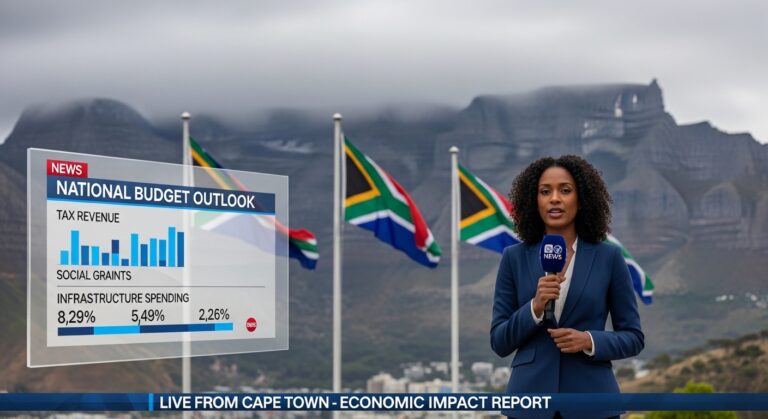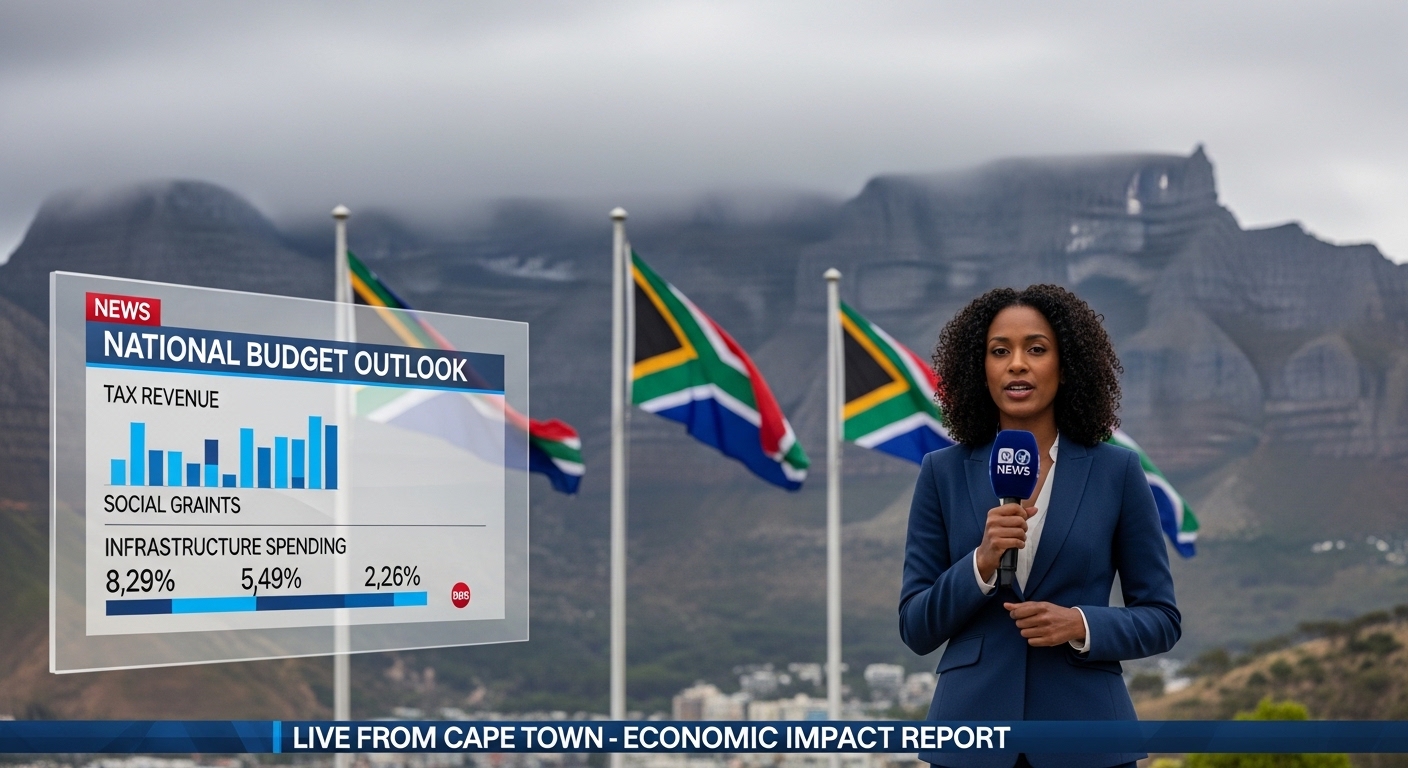
South Africa’s National Treasury is set to present a crucial budget that aims to balance rising social needs, infrastructure investment, and the urgent task of stabilizing public finances. As Finance Minister prepares to address the nation, expectations are high that the budget will provide clarity on how government plans to raise additional revenue while managing limited resources in a fragile economic environment.
Broadcast live from Cape Town, near the iconic Table Mountain, analysts and journalists highlighted that this year’s budget comes under far more stable conditions than last year. In contrast to the uncertainty that led to the postponement of the 2024 budget, recent economic indicators suggest cautious optimism.
Economic Green Shoots, but Slow Growth
Economists note that South Africa’s economic data over the past year has shown encouraging signs. The country’s exit from the Financial Action Task Force grey list has improved investor confidence, while certain sectors have shown modest recovery. However, economic growth remains subdued, with projections averaging around 1.8% over the next three years.
While this growth is an improvement, experts warn it is insufficient to meaningfully reduce South Africa’s persistently high unemployment rate. Mining, once a key driver of the economy, continues to struggle despite elevated commodity prices. Structural challenges such as logistics bottlenecks, port inefficiencies, and skills shortages still weigh heavily on long-term growth prospects.
Revenue Pressures and Rising Taxes
One of the central questions surrounding the budget is how the government will raise additional revenue without placing excessive strain on households already grappling with a high cost of living. Analysts expect indirect taxes—often referred to as “hidden taxes,” such as fuel levies and excise duties—to rise once again.
At the same time, strong performance in commodity markets and record levels on the Johannesburg Stock Exchange may provide temporary relief to tax revenues. Gold prices and positive market sentiment could boost government coffers, but experts caution that such gains are cyclical and cannot replace sustained economic reform.
Social Spending Still Dominates
Approximately 60% of government expenditure continues to be allocated to the social wage, including grants, healthcare, education, and housing. For millions of South Africans, these grants remain a vital lifeline amid limited job opportunities.
The Social Relief of Distress (SRD) grant is expected to continue, following confirmation from the President. However, the government is under growing pressure to link social assistance to productivity measures, skills development, or pathways into employment, rather than maintaining permanent dependency.
Economists argue that while social protection is essential, long-term solutions must focus on expanding the productive capacity of the economy. Without stronger growth, fiscal space will continue to shrink, making it increasingly difficult to fund both welfare and development priorities.
Infrastructure, Debt, and the Hard Choices Ahead
Infrastructure investment remains a priority, particularly in energy, transport, and logistics. Initiatives such as port reforms and electricity sector improvements have shown progress, contributing to improved investor sentiment. However, these projects require significant funding at a time when government debt and debt-servicing costs remain elevated.
Reducing sovereign debt remains a key objective, but analysts acknowledge this will be difficult without faster growth and disciplined spending. Every rand allocated to debt interest is a rand unavailable for social services or infrastructure, underscoring the delicate balancing act facing policymakers.
The Question That Matters Most
Ultimately, while businesses and financial markets may respond positively to fiscal stability and reform signals, the most important question remains: will the lives of ordinary South Africans improve?
As the Finance Minister takes to the podium, citizens will be listening closely for answers on jobs, taxes, grants, and growth. The success of this budget will not only be measured in balance sheets and forecasts, but in whether it offers real hope to households struggling to make ends meet in a slow-growing economy.
About the Author